5.9(Q2)
CiteScore
31
h-index

Facts & Figures

h-index

31

i10-index

124

Google Scholar Citation

4075

SJR 2024

0.490

CiteScore 2024

5.9

SNIP 2024

0.765

Scimago Journal Ranking 2024

Q2

Quarterly (Scopus)

Q2

(65%)

H-index (Scimago)

19

Issue per year

12

No. of volumes

9

No. of Issues

47

Number of Articles

496

Acceptance rate

47

Accept Date (Days)

52

No. of submissions

1,074

Accepted Submissions

504

Rejected Submissions

476

Article view

581,509

PDF download

401,762

View Per Article

1172.4

PDF Download Per Article

810

Number of Reviewers

3816

Number of Contributors

1,734

No. of databases

18


Advanced Journal of Chemistry, Section A (Adv. J. Chem. A)            

The Advanced Journal of Chemistry, Section A, was launched in 2018 by Sami Publishing Company (SPC) in collaboration with the  Iranian Chemical Science and Technologies Association. This double-blind, peer-reviewed, and indexed journal aims to provide a platform for researchers worldwide to share their latest findings across all fields of chemistry. Both engineering, theoretical, and applied original research studies in all fields of chemistry are welcome for submission. The journal is open access with article processing charges, but all articles published in this journal are freely available for readers online  without a subscription, and authors retain the copyright of their work. 

Note: Based on the increase of good and quality articles in the AJCA journal, we decided that in 2025, this journal will be published as a monthly (12 issues per year). We will use all our expertise and commitment to maintain quality and adhere to publishing ethics. Please support your journal.

Advanced Journal of Chemistry, Section A is indexed in the Scopus:  Q2 (Scopus, 65%), Q2 (Scimago, SJR 2024=0,49), CiteScore 2024=5.9, h-index=19,

Category in the Scopus (You can check it in the SciVal),

  1. Chemistry (Physical and Theoretical Chemistry), Rank=62/187, Percentile=65%=Q2
  2. Chemical Engineering (Chemical Engineering (miscellaneous)), Rank=35/91, Percentile=62%=Q2

The acceptance rate of Adv. J. Chem. A was 45% in 2025. The average time between submission and final decision is 4-6 weeks and the average time between acceptance and publication is 2-3 weeks (Link). 

Synthesis and Characterization of Nano-Palm Oil Fuel Ash and Nano-Fly Ash as Cementitious Fillers in High-Performance Engineering Cementitious Composites

Pages 947-961

https://doi.org/10.48309/ajca.2026.554924.1955

Shinta Marito Siregar, Fatimah Insani Harahap, Ridwanto Ridwanto, Khairiah Khairiah

Abstract This study aims to enhance the pozzolanic reactivity and cementitious performance of palm oil fuel ash (POFA) and fly ash (FA) nanoparticles as eco-friendly supplementary materials in nanostructured engineered cementitious composites (ECC), thereby reducing industrial boiler waste and contributing to sustainable construction practices. POFA and FA were dried and ground into nanoparticles using a ball mill with replacement levels of 0%, 5%, 10%, and 15%. Characterization was performed using XRF, XRD, and FTIR, while physical tests included slump flow, density, and compressive strength. XRF confirmed the cementitious and pozzolanic properties of POFA and FA, with POFA containing over 50% SiO₂+Al₂O₃+Fe₂O₃ and FA exceeding 70%. XRD showed average crystal sizes of 28.02 nm (POFA) and 16.46 nm (FA) with amorphous phases of 71.78% and 91.93%, respectively. FTIR revealed dominant Si–O–Si and Si–OH groups, indicating high silica content and pozzolanic reactivity. The slump flow decreased with higher POFA and FA content due to water absorption but remained within the high-performance concrete range (500–800 mm). Density values decreased yet stayed between normal and lightweight concrete limits. The compressive strength increased with higher nanoparticle content, reaching 46.34–72.73 MPa at 28 days, confirming improved hydration and mechanical performance

Emerging Analytical Techniques for Detection of Environmental Pollutants: A Review

Pages 962-996

https://doi.org/10.48309/ajca.2026.561017.1973

Phanindra Erukulla, Pericharla Venkata Narasimha Raju, Konatham Teja Kumar Reddy, Venkata Ramana Singamaneni, Ashutosh Pathak, Sunil Kumar Yadav, M. Sandeep Kumar, Abdul Ajeed Mohathasim Billah

Abstract Environmental pollution is one of the most challenging issues for the sustainability of our planet, human health, and ecosystem integrity. Increasing evidence of the release of organic, inorganic, and emerging contaminants necessitates measures for more accurate, rapid, and inexpensive techniques for contamination detection. Although traditional analytical methodologies yield reliable results, they are often hampered by time-consuming sample preparation, high operational costs, and low applicability in the field. Recent developments in analytical science have provided a host of innovative technologies that can overcome these limitations. This review provides a thorough examination of emerging analytical techniques for the detection of pollutants in the environment, including nanomaterial-based sensors, surface-enhanced Raman spectroscopy (SERS), laser-induced breakdown spectroscopy (LIBS), and mass spectrometry-coupled hybrid systems GC–GC-MS and LC–MS/MS. Portable applications have also been developed by integrating microfluidic and lab-on-a-chip devices for convenient real-time analysis. Finally, the inclusion of machine learning (ML) and artificial intelligence (AI) algorithms has dramatically changed the data interpretation process to include predictive modeling and automated environmental monitoring. There is also an emphasis on environmentally friendly and sustainable analytical techniques, including miniaturized, solvent-free, and bioanalytical procedures, that conform to green chemistry guidelines. Despite these achievements, there are significant obstacles in terms of standardization, analytical performance, and scalability. The objectives of this review are to discuss the present advancements, address the identified limitations, and offer future research strategies on smart, integrated, and sustainable analytical methodologies for the rapid detection and management of environmental contaminants.

β-Cyclodextrin-Based Metal–Organic Framework as a Novel Functional Bioactive Carrier: A study for Quercetin Delivery

Pages 997-1013

https://doi.org/10.48309/ajca.2026.558546.1966

Muhammad Furqon Novryan Saputra, Aliyah Nabila, Madyawati Latief, Ayu Nadila Safitri, Indra Lasmana Tarigan

Abstract Quercetin is a natural flavonoid with strong antioxidant and therapeutic potential; yet, its practical use is hindered by poor aqueous solubility. To overcome this limitation, this study develops a functional carrier system based on a β-cyclodextrin metal–organic framework (β-CD-MOF) modified with cetyltrimethylammonium bromide (CTAB). In this design, CTAB acts as a surface-active modifier that improves the interaction between quercetin and the framework, while β-cyclodextrin provides hydrophobic cavities capable of accommodating bioactive molecules. Structural and morphological characterizations using FTIR, XRD, SEM, and PSA confirm the successful synthesis and modification of the material. In vitro release studies reveal a biphasic and controlled release profile, accompanied by a notable improvement in quercetin solubility compared to its free form. Overall, these findings demonstrate that CTAB-modified β-CD-MOF effectively encapsulates quercetin and enhances its dissolution behavior, highlighting its potential as a promising carrier system for hydrophobic compounds.

Isolation and Evaluation of 8-Deoxygartanin from Garcinia mangostana as Dual EGFR/VEGFR-2 Inhibitors: Integrated In Vitro and Molecular Dynamics Approaches

Pages 1014-1030

https://doi.org/10.48309/ajca.2026.563858.1992

Fera Kurniadewi, Irma Ratna Kartika, Elsa Vera Nanda, Hanhan Dianhar, Bina Permana, Naila Mushofa, Andi Fatimah Azzahra, Ade Danova, Elvira Hermawati

Abstract Despite advances in cancer therapy, severe side effects and drug resistance highlight the need for safer multi-target strategies. Targeting multiple receptor tyrosine kinases has emerged as a rational approach, and natural products, particularly xanthones from Garcinia mangostana, offer structurally diverse scaffolds with promising anticancer potential. This study presents an in vitro evaluation of three xanthones: 8-deoxygartanin (1), gartanin (2), and garcinone B (3) evaluated against epidermal growth factor receptor (EGFR) and vascular endothelial growth factor receptor-2 (VEGFR-2/KDR). Among the tested compounds, 8-deoxygartanin (1) exhibited the strongest dual inhibitory activity, with 78% and 51% inhibition of VEGFR-2 and EGFR, respectively, at 10 µM. Molecular docking analysis indicated that compound (1) binds to the active pockets of both kinases primarily through hydrophobic interactions. Furthermore, molecular dynamics simulations confirmed the stability of compound (1)-protein complexes over 500 ns in an aqueous environment. Structure-activity relationship (SAR) analysis revealed that prenylation and the specific distribution of hydroxyl and methoxy groups significantly influenced potency and selectivity. Comparison with mangostin-type analogues further underscored the superior profile of compound (1). This study provides novel mechanistic insights into Garcinia-derived xanthones and highlights 8-deoxygartanin as a promising scaffold for the rational design of dual EGFR/KDR-targeting anticancer agents.

Synthesis, IR and NMR–Spectroscopic, DFT Study of Aroyl Hydrazones 4,4,4-Trifluoro-1-(3-Furanyl)-1,3-Butanedione

Pages 1031-1047

https://doi.org/10.48309/ajca.2026.549860.1945

Maftuna Jo‘rayevna Ruzieva, Murod Amonovich Tursunov, Dana Sapargalievna Belgibayeva, Sardor Aminovich Karomatov, Bakhtiyor Shukurulloyevich Ganiev, Savriyeva Qahramon Qizi Nigina

Abstract Aroyl hydrazones derived from 4,4,4-trifluoro-1-(3-furanyl)-1,3-butanedione represent a structurally distinctive and chemically significant class of organic compounds with considerable potential for application in various fields, including coordination chemistry, spectroscopy, and medicinal chemistry. These compounds exhibit versatile chelating behavior and are of great interest due to their pronounced biological activity. In the present study, a series of aroyl hydrazones was successfully synthesized via condensation of substituted acid hydrazides with the trifluoroacetyl moiety of the β-diketone precursor. Structural elucidation was carried out using Fourier-transform infrared (FTIR) spectroscopy, 1H and 13C nuclear magnetic resonance (NMR) techniques, and theoretical methods based on density functional theory (DFT). Experimental data correlated well with DFT-optimized structures, confirming the predominance of the hydrazone tautomer. Theoretical calculations also provided HOMO-LUMO energy levels, dipole moments, molecular electrostatic potential (MEP) maps, and Mulliken charge distributions. Molecular docking studies revealed energetically favorable binding interactions with P. aeruginosa target proteins. Molecular docking of the H2L1 ligand with the 1U1Z protein exhibited strong binding interactions (–11.6255 kcal/mol) via hydrogen bonds, π-π, and π-anion contacts, suggesting promising biological activity. Taken together, the findings of this study underline the potential applicability of these hydrazones as ligands for metal complexation and as promising bioactive compounds.

Structure-Based Design and Characterization of Cyclosenegalin Derivatives as Novel Breast Cancer Therapeutics

Pages 1048-1074

https://doi.org/10.48309/ajca.2026.560035.1971

Jajang Japar Sodik, Kania Fajarwati, Farandina Suarantika, Taufik Muhammad Fakih, Rani Maharani, Dhania Novitasari

Abstract Triple-negative breast cancer (TNBC), which lacks ER, PR, and HER2 expression, remains challenging to treat due to the absence of targeted therapeutic options and frequent chemoresistance. Cyclosenegalin A, a cyclic heptapeptide, offers a compact β-turn scaffold amenable to selective receptor engagement but displays only moderate native activity. In this study, computational modeling, chemical synthesis, and cell-based evaluation were integrated to develop cyclosenegalin-derived peptides as anticancer candidates. A 29-member analog panel was sketched in ChemDraw, converted to 3D in Chem3D, and subjected to geometry and frequency optimization using Gaussian (DFT B3LYP/3-21G) to afford electronically stable conformers. Molecular docking with AutoDock Vina against ERα (PDB: 3ERT), PR (2OVH), EGFR kinase (2ITY), and the IκBα/NF-κB complex (1NFI) identified two multi-target leads, A14 and A21, which exhibited consistently lower predicted binding free energies and extensive hydrogen-bond and hydrophobic contact networks at key pocket residues. Both peptides were synthesized via Fmoc-based solid-phase assembly, macrocyclized under dilute conditions, purified by RP-HPLC to >95% purity, and structurally confirmed by ESI-MS (calcd/obs: A14, 757.89 Da / [M+H]⁺ 761–762; A21, 762.87 Da / [M+H]⁺ 762). Antiproliferative activity evaluated using the MTT assay against luminal T-47D and TNBC MDA-MB-231 cells showed that A21 was the most potent analog, with IC₅₀ values of 387.99 ± 10.2 µg/mL (T-47D) and 143.15 ± 6.4 µg/mL (MDA-MB-231), outperforming A14 (710.28 ± 12.4 µg/mL and 220.05 ± 8.6 µg/mL, respectively). Both peptides demonstrated preferential cytotoxicity toward the TNBC subtype, with A21 offering a favorable balance of potency and subtype selectivity. Collectively, these findings validate a docking-led design pipeline for cyclosenegalin-based cyclic peptides and identify A21 as a tractable lead for further optimization, mechanistic studies focused on EGFR/NF-κB pathway modulation, and future in vivo investigations.

Development and Validation of a Rapid, Simple and Precise LC-MS/MS Method for the Quantification of Vincristine

Pages 1075-1086

https://doi.org/10.48309/ajca.2026.561458.1975

Vemu Priyanka, Malarkodi Velraj

Abstract A rapid, precise, and economical LC-MS/MS method was developed and validated for the quantification of vincristine. The method utilizes electrospray ionization in positive mode with multiple reaction monitoring (MRM) for a precursor-to-product ion transition of m/z 825.3 > 807.3. Effective chromatographic separation was achieved using a Thermo Hypurity C18 column (50 mm x 4.6 mm, 5 µm). The mobile phase consisted of 2 mM ammonium formate with 0.2% formic acid in acetonitrile at a ratio of 30:70 (v/v), pumped at a flow rate of 0.5 mL/min. The retention time (RT) for vincristine was 1.21 minutes and the total run time was 2.5 minutes. The method was validated according to ICH Q2(R1) guidelines, with the Limit of Detection (LOD) and Limit of Quantitation (LOQ) determined to be 3 ppm and 10 ppm, respectively, calculated using standard regression statistics. Linearity was established over a concentration range of 10– 150 ppm (y = 698.983 x − 2606.21; R² = 0.995734). Accuracy (mean % recovery) across LOQ, 50%, 100%, and 150% levels was within 91–106%, and precision (relative standard deviation [%RSD]) ranged from 1.2% to 3.1% (intraday and inter-day), meeting the acceptance criteria for routine analysis. The system suitability %RSD for the peak area was 2.27%, and the RSD for RT was 0.45%. The method was successfully applied to quantify vincristine loaded on drug-eluting stents (DES) and to evaluate in vitro release kinetics (DES extraction and release sample testing included in validation). This method is suitable for routine quality control and formulation development of vincristine-containing DES.

Phytochemical Profiling and Computational Assessment of Cissus verticillata Bioactives Using GC–MS Against Mycobacterium tuberculosis

Pages 1087-1111

https://doi.org/10.48309/ajca.2026.561857.1978

Sanjay Kumar Nayak, Neelam Sharma, Ganesh Meena B., Yaso Deepika Mamidisetti, Rashmi Ranjan Sarangi, Rajendra Kumar Jadi, Murugesan Sudha, Divya Amaravadi, Jainendra Kumar Battineni

Abstract This study investigated the phytochemical composition and antitubercular potential of Cissus verticillata using an integrated gas chromatography mass spectroscopy (GC–MS), molecular docking, and ADMET approach. The authenticated hydroalcoholic extract showed a dark brown to greenish-brown appearance, a yield of 10.95%, near-neutral pH, and the absence of foreign matter, heavy metals, pesticide residues, and pathogenic microorganisms, confirming its suitability for pharmacological use. Preliminary phytochemical screening indicated a rich metabolite profile with strong presence of alkaloids, flavonoids, and phenolic compounds, along with moderate levels of saponins and tannins. GC–MS analysis identified 55 phytochemical constituents, with major compounds, including L-prolyl-L-valine (13.28%), 3,6-diisopropylpiperazin-2,5-dione (4.72%), hydrocinnamic acid (3.84%), and tyrosol (2.39%), supported by minor sterols, esters, and phenolics, which contribute to chemical diversity. Molecular docking against Mycobacterium tuberculosis MurG glycosyltransferase (PDB ID: 2WGE) revealed strong binding affinities for squalene (–8.3 kcal/mol), loliolide (–7.2 kcal/mol), quinic acid (–7.1 kcal/mol), and methyl-N-hydroxybenzenecarboximidate (–7.0 kcal/mol), surpassing or matching the native ligand. Key hydrophobic and hydrogen-bond interactions were observed with PHE404, HIS311, PRO280, and GLY403. The ADMET analysis highlighted loliolide, maltol, 5-hydroxymethylfurfural, and quinic acid as drug-like candidates with favorable solubility, absorption, low toxicity, and minimal environmental bioaccumulation. Collectively, these findings position Cissus verticillata is a promising source of antitubercular lead compounds, warranting further experimental validation.

Evaluation of Apremilast as a Potential Inhibitor of Activated Factor XII: In-Vitro and In-Silico Approaches

Pages 1112-1127

https://doi.org/10.48309/ajca.2026.566309.2009

Hassan A. Madkhali, Mohd Nazam Ansari, Yassine Riadi, Majid A. Ganaie, Abdullah Y. Hamadi, Naif M. Alhawiti

Abstract This study aimed to evaluate the inhibitory effects of apremilast on activated coagulation factor XII (FXIIa) using chromogenic enzyme assays and to examine molecular interactions between apremilast and benzamidine with the target protein 6I63 (FXIIa) through in silico techniques including docking, structural analyses, and dynamic simulations. The interaction strength of these complexes, focusing on hydrogen bonds, Root Mean Square Deviation (RMSD), Root Mean Square Fluctuation (RMSF), and Solvent Accessible Surface Area (SASA), was analyzed. Additionally, the selectivity of apremilast toward FXIIa over other related serine proteases (FIXa, FXa, FXIa, and plasma kallikrein) was determined using chromogenic assays. The findings indicated that apremilast has a significant inhibitory effect on FXIIa, while no notable effects were observed on the other proteases, suggesting selectivity for FXIIa. Furthermore, apremilast showed stronger binding affinity with 6I63 (−6.9 kcal/mol) compared to benzamidine (−5.3 kcal/mol), indicating a more stable and specific interaction. Apremilast induced greater compactness and stability of the complex, with lower RMSD and SASA values, whereas benzamidine favored a more flexible and less stable interaction. These results highlight distinct mechanisms by which each ligand interacts with FXIIa and provide insights into their therapeutic potential, suggesting apremilast could be effective in treating FXIIa-related diseases. In addition, ADME analysis revealed that benzamidine has better solubility, intestinal absorption, and excretion, while apremilast exhibits superior oral absorption and stronger inhibition of cytochrome P450 enzymes. Toxicity studies showed both compounds are mutagenic. Taken together, apremilast could serve as a lead compound for developing new therapeutic agents targeting FXIIa-related diseases.

Computational Multi-Target Profiling of Lupeol Against Cardiometabolic Diseases: An Integrated Docking, Network Pharmacology, and Molecular Dynamics Approach

Pages 1128-1154

https://doi.org/10.48309/ajca.2026.562524.1984

Pavithra Velusamy, S. Rani, G. Ariharasivakumar

Abstract Cardiometabolic diseases (CMDs), including type 2 diabetes, obesity, and cardiovascular disorders, share interlinked pathogenic mechanisms involving chronic inflammation, insulin resistance, oxidative stress, and endothelial dysfunction. Multi-target agents derived from natural compounds offer promising therapeutic avenues for CMD management. Lupeol, a pentacyclic triterpenoid, has demonstrated diverse bioactivities, yet its mechanistic relevance in CMDs has not been comprehensively elucidated.We aimed to elucidate the multitarget pharmacological potential of lupeol against CMDs through an integrated computational approach encompassing network pharmacology, computational docking, and dynamic simulation.Lupeol- and CMD-associated targets were retrieved from various databases and analyzed via protein–protein interaction (PPI) analysis via Cytoscape. Functional enrichment was performed using DAVID and Metascape. Drug-likeness and toxicity were assessed through SwissADME and ADMETlab 2.0. Binding affinities were evaluated using computational docking, followed by MD simulations and specific tissue expressions to validate complex stability. A total of 179 shared targets were identified, with STAT3, MAPK3, ESR1, EGFR, and CXCR4 emerging as key hub genes. GO and KEGG enrichment highlighted significant involvement in PI3K–Akt, MAPK, JAK–STAT, and AGE–RAGE regulatory pathways. Lupeol exhibited strong interaction energies (–9.08 to –6.08 kcal/mol) and stable interactions with major CMD targets. ADME-Tox profiling demonstrated its oral bioavailability, BBB permeability, and low toxicity risk. MD simulations showed stable protein–ligand conformations under near-physiological conditions. Collectively, these findings highlight lupeol as a promising multi-target lead compound for cardiometabolic disease management and provide a robust computational foundation for its future experimental and translational evaluation.

Exploring Quinazolinone Compound as Corrosion Inhibitor for Mild Steel in Acidic Media: Electrochemical and Theoretical Studies

Pages 1155-1178

https://doi.org/10.48309/ajca.2026.546165.1994

Hind Malki, Otmane Kharbouch, Fatima Hamouche, Nadia Dkhireche, Khalil El Mabrouk, Fatima Elhajri, Zakaria Benzekri, Said Boukhris

Abstract This study examines the corrosion inhibition efficacy of a novel quinazolinone derivative, 1'H-spiro[cyclohexane-1,2-quinazolin]-4'(3'H)-one (ZB5). The compound was characterized by ¹³C-NMR and ¹H-NMR spectroscopy, and its corrosion inhibition activity on mild steel (MS) was evaluated in a 1.0 M HCl solution using potentiodynamic polarization (PDP) and electrochemical impedance spectroscopy (EIS). ZB5 demonstrated remarkable protection, with an inhibition efficiency of 82.83% at 10⁻³ M. Adsorption studies revealed that ZB5 follows the Langmuir isotherm model, confirming monolayer adsorption on the MS surface. Surface characterization by SEM/EDS, XRD, and FTIR confirmed the formation of a protective layer, while ICP-OES analysis provided information on elemental composition and ion release. Further density functional theory (DFT) calculations and Monte Carlo (MC) simulations established a strong correlation between the electronic structure of ZB5 and its adsorption behavior, thus confirming the experimental results. Overall, this work provides robust experimental and theoretical evidence for ZB5's strong corrosion-inhibiting capacity, highlighting its potential as an effective protective agent for mild steel in acidic environments.

An Image Analysis-Assisted Paper-Based Colorimetric Aptasensor for Simple and Rapid Malathion Detection

Pages 1179-1191

https://doi.org/10.48309/ajca.2026.563604.1990

Mardhiahtul Iftiah Ariffin, Norli Abdullah, Nor Laili-Azua Jamari, Fareha Hilaluddin, Keat Khim Ong, Mohd Junaedy Osman, Jahwarhar Izuan Abdul Rashid, Siti Aminah Mohd Noor, Wan Md Zin Wan Yunus, Victor Feizal Knight, Chai Keong Ngan, Seng Teik Ten, Mohd Nor Faiz Norrrahim

Abstract Paper-based colorimetric sensors have been widely applied as cost-effective tools for on-site pesticide detection. The availability of inexpensive imaging technologies, such as smartphones, has enhanced the efficiency of detection methodologies. This work describes the development of an image analysis-assisted paper-based colorimetric aptasensor for malathion (MLT) detection. The sensing paper was fabricated by immobilizing a mixture of citrate-capped gold nanoparticles (cit-AuNPs) and thiolated DNA aptamer (Apt) onto Whatman filter paper. After a 3-minute reaction, the paper exhibited a visible color change in the presence of MLT due to cit-AuNP aggregation. Smartphone images of the sensing paper, captured before and after MLT addition, were processed using ImageJ software to obtain red, green, and blue (RGB) values, with the response expressed as ΔRGB. The aptasensor achieved a limit of detection (LOD) of 0.67 μM with a linear range of 100–1,000 μM. This paper-based colorimetric aptasensor provides a simple and rapid method for on-site MLT detection.

Enhanced Proton Conductivity and Stability of Sulfonated Polystyrene-Based Nanocomposite Membranes Incorporating MIL-101(Cr) for Fuel Cell Applications

Pages 1192-1208

https://doi.org/10.48309/ajca.2026.562929.1986

Valiollah Mnadanipour, Gholamreza Karimipour, Morteza Montazerozohori, Masoumeh Salehi

Abstract The development of high-performance proton exchange membranes (PEMs) is crucial for improving the efficiency and durability of fuel cells. In this study, sulfonated polystyrene (SPS) was reinforced with different loadings of MIL-101(Cr) (2.5, 5, and 7.5 wt%), a highly porous metal–organic framework (MOF) with a specific surface area of 1,811.06 m² g⁻¹, to fabricate nanocomposite membranes via a solution-casting method. The incorporation of MIL-101(Cr) significantly enhanced key physicochemical and electrochemical properties of the membranes. Water uptake increased from 38.2% to 48.6%, while the ion exchange capacity (IEC) reached up to 0.95 meq g⁻¹ with increasing MOF content. The composite membranes exhibited excellent oxidative stability, retaining more than 97% of their original weight after exposure to Fenton’s reagent at 80 °C. Electrochemical impedance spectroscopy (EIS) revealed that proton conductivity increased with MIL-101(Cr) loading, reaching a maximum value of 0.0914 S cm⁻¹ at 80 °C and 60% relative humidity for the membrane containing 7.5 wt% MIL-101(Cr). In addition, methanol permeability remained in the order of 10⁻⁷ cm² s⁻¹, leading to a markedly improved selectivity factor compared to the MOF-free membrane. These results demonstrate that MIL-101(Cr)-based SPS nanocomposite membranes exhibit a well-balanced combination of high proton conductivity, low methanol crossover, and excellent oxidative stability, highlighting their strong potential for application in next-generation proton exchange membrane fuel cells (PEMFCs) and direct methanol fuel cells (DMFCs).

Uncovering Male Fertility–Modulating Potential of Murraya koenigii through Network Pharmacology and In Silico Targeting of Reproductive Proteins

Articles in Press, Accepted Manuscript, Available Online from 09 February 2026

https://doi.org/10.48309/ajca.2026.565726.2004

Nizan Mauyah, Rajuddin Rajuddin, Suhartono Suhartono, Hamny Sofyan, Mulkan Azhary

Abstract Murraya koenigii (L.) Spreng., commonly known as curry leaf, is widely utilized in traditional medicine and valued for its richness in bioactive compounds, including carbazole alkaloids, flavonoids, tannins, and essential oils. While its antioxidant, anti-inflammatory, and metabolic regulatory activities are well established, its potential role in reproductive biology remains insufficiently studied. This study aimed to investigate the potential of M. koenigii phytochemicals to modulate male fertility by targeting key reproductive proteins and receptors. Network pharmacology and molecular docking analyses were employed to examine interactions with gonadotropin-releasing hormone receptor (GNRHR), follicle-stimulating hormone receptor (FSHR), cAMP-responsive element modulator (CREM), and protamine 2 (PRM2). The constructed interaction network revealed biologically relevant associations, particularly the CREM–PRM2 regulatory axis, which is crucial for spermatogenesis and sperm chromatin remodeling. Docking analyses suggested that selected phytoconstituents possess favorable binding affinities toward gonadotropin-related receptors, supporting their potential to influence the hypothalamic–pituitary–gonadal axis and downstream transcriptional events. These findings provide mechanistic insights into the traditional use of M. koenigii in reproductive health and highlight its promise as a natural source for developing botanical-based therapeutics in male infertility management.

Integrative In Vitro and In Silico Evaluation of Etlingera hemisphaerica Reveals Potent Estrogen Receptor–Targeted Cytotoxicity Against MCF-7 Breast Cancer Cells

Articles in Press, Accepted Manuscript, Available Online from 09 February 2026

https://doi.org/10.48309/ajca.2026.566349.2005

Muhammad Ridhwan, Ernilasari Ernilasari, Erick Khristian, . Saudah, Rika Yusnani

Abstract Breast cancer remains a leading cause of cancer-related mortality worldwide, emphasizing the need for effective and affordable therapeutic agents derived from natural sources. Etlingera hemisphaerica, a member of the Zingiberaceae family, has received limited scientific attention despite its recognized ethnopharmacological relevance. This study aimed to investigate the anticancer potential of E. hemisphaerica through an integrated in vitro cytotoxicity and in silico molecular modeling approach. The cytotoxic activity of the ethanol extract of E. hemisphaerica was evaluated against estrogen receptor-positive (ERα⁺) MCF-7 human breast cancer cells using the MTT assay after 72 h of exposure. The extract exhibited a pronounced dose-dependent reduction in cell viability, yielding an exceptionally low IC₅₀ value of 1.16 ppm, categorizing it as highly cytotoxic according to established screening criteria. Dose–response modeling using a four-parameter log-logistic regression confirmed a classical sigmoidal inhibition pattern, indicative of a specific and saturable biological effect. To elucidate potential molecular mechanisms, major flavonoid constituents were subjected to molecular docking analysis against estrogen receptor alpha (ERα). Several compounds, particularly quercetin, luteolin, isorhamnetin, and kaempferol, exhibited strong binding affinities (ΔG −8.4 kcal/mol), comparable to known ERα modulators. Drug-likeness and ADMET profiling further revealed that quercetin exhibits favorable pharmacokinetic properties, including high gastrointestinal absorption, non-P-glycoprotein substrate behavior, and full compliance with Lipinski’s rule of five. Collectively, these findings indicate that E. hemisphaerica possesses potent cytotoxic activity against breast cancer cells, potentially mediated through modulation of ERα-related signaling pathways and mitochondrial-dependent mechanisms. This integrative study provides the first mechanistic insight into its anticancer potential and supports its promise as a valuable source of lead compounds for breast cancer drug discovery.

One-Pot Microwave-Assisted Synthesis of Chlorinated Benzylamine-Substituted Pyrazine Derivatives and In Silico Studies of Their Potential as EGFR and HER2 Inhibitors

Articles in Press, Accepted Manuscript, Available Online from 12 February 2026

https://doi.org/10.48309/ajca.2026.565862.2000

Widiastuti Agustina Eko Setyowati, Imarotul Unsiyah, Celicarina Anwar, Muhammad Hizbul Wathon, Elfi Susanti VH, Sri Retno Dwi Ariani

Abstract Pyrazine is widely used in pharmaceuticals, and benzylamine offers advantages due to its reactive amine group, while the chloro-substituent may enhance its metabolic stability. This suggests that the structural modification of pyrazines using chlorinated benzylamine may provide novel molecules with enhanced biological activity; however, such modifications have not been extensively pursued. This study aims to synthesize chlorinated benzylamine-substituted pyrazine derivatives, obtain an effective synthetic method, and determine their potential as EGFR and HER2 inhibitors. Synthesis was carried out using three methods, namely microwave-assisted synthesis (MAS), ultrasound-assisted synthesis (UAS), and conventional methods. Three benzylamine-substituted pyrazine derivatives, namely 3-amino-N-(3-chlorobenzyl)pyrazine-2-carboxamide (1), 3-amino-N-(4-chlorobenzyl)pyrazine-2-carboxamide (2), and 3-amino-N-(2,4-dichlorobenzyl)pyrazine-2-carboxamide (3), have been successfully synthesized. The structures of compounds 1-3 have been determined comprehensively based on FT-IR, 1H- NMR, 13C-NMR, HMBC, HSQC, and HRMS spectra. MAS proved to be superior, performing the synthesis in a much faster time (30 min), with higher yields (78-93%) compared to UAS (61-69%) and conventional methods (58-65%). Compound 1 is predicted to be more favorable as an EGFR inhibitor, while compound 3 is more favorable as an HER2 inhibitor. Predicted pharmacokinetics, toxicity, and drug-likeness of compounds 1-3 provide a good initial safety prediction, but experimental toxicology is necessary to confirm the safety issues. These three compounds are recommended for further in vitro and in vivo studies as EGFR and HER2 inhibitors.

Investigation of the Physicochemical Behavior of a Thermosensitive Hydrogel Based on Carboxymethyl Cellulose (CMC) with Phosphate–Calcium Microfillers

Articles in Press, Accepted Manuscript, Available Online from 12 February 2026

https://doi.org/10.48309/ajca.2026.568215.2013

Abdugani Azimov Mutalovich, Gani Moldaculovich Iztleuov, Nazmi Mat Nawi Mat, Assylbek Yessenbek, Zhambul Aimenov

Abstract This study explores the physicochemical behavior of a heat-responsive hydrogel composite produced from carboxymethyl cellulose (CMC) and poly(N-isopropylacrylamide) (pNIPAAm), additionally reinforced with calcium phosphate microfillers. The purpose of the work was to design and evaluate a polymer material capable of rapidly absorbing water while providing controlled ion release. The hydrogel was synthesized through free-radical copolymerization under gentle heating, which supported the formation of a semi-interpenetrating network strengthened by ionic interactions between CMC functional groups and the mineral additives. Swelling tests have shown that the material absorbs a significant amount of water at temperatures below the lower critical solution temperature (LCST), and absorption clearly decreases after temperatures above approximately 30-34 °C, indicating temperature-related structural changes. Thermal analysis (TGA/DSC) showed a multi-stage decomposition pattern typical of cellulose-synthetic polymer systems, with the main decomposition occurring at temperatures between 250 and 450 °C. The porous polymer and mineral structure, which are well interconnected through microscopic studies, were determined by these studies. By adding calcium and phosphate to the composition, the mechanical integrity of the polymer was strengthened, increasing its ability to retain moisture and enhancing its applicability.

Characterization of Liquid Smoke Made from Cocoa Pod Husk and Corn Cobs Mixture by Slow Pyrolysis

Articles in Press, Accepted Manuscript, Available Online from 13 February 2026

https://doi.org/10.48309/ajca.2026.565886.2001

Mohammad Wijaya, Muhammad Hatta Jamil, Muhammad Wiharto, Hasrawati Bahar, Jufri Jufri, Jumardi Jumardi

Abstract This study investigated the pyrolysis of mixed cocoa pod husk (CPH) and corn cob (CC) biomass and the chemical characteristics of the resulting liquid smoke. Three biomass mixtures from different geographic origins were evaluated. The biomass mixtures investigated were: (i) cocoa pod husk from Luwu combined with corn cob from Jeneponto (Mixture A); (ii) cocoa pod husk from Wajo combined with corn cob from Gowa (Mixture B); and (iii) cocoa pod husk from Sidrap combined with corn cob from Takalar (Mixture C). Pyrolysis at 228 °C produced the highest liquid yields for Mixture A (39.93%), Mixture B (40.07%), and Mixture C (39.94%). GC–MS analysis revealed that the liquid smoke consisted mainly of organic acids, phenolic compounds, and carbonyl compounds, along with smaller amounts of furans, alcohols, pyridines, and nitrogen-containing compounds. Distinct variations in chemical composition were observed among the liquid smoke samples derived from the different biomass mixtures. These results demonstrate that mixed CPH and CC biomass can be effectively converted via pyrolysis into chemically rich liquid smoke, indicating strong potential for biomass waste valorization.

Optimization of Antioxidant Extraction from Moringa oleifera Leaves Using an Integrated OFAT and RSM–CCD Approach

Articles in Press, Accepted Manuscript, Available Online from 14 February 2026

https://doi.org/10.48309/ajca.2026.566928.2007

Yefrida Yefrida, Deswati Deswati, Refilda Refilda, Hasifa Hayana, Nurjannah El Firsti, Adewirli Putra

Abstract Moringa oleifera leaves are a rich source of phenolic and flavonoid antioxidants; yet, optimisation of conventional water-based extraction is rarely modeled comprehensively. This study integrates one-factor-at-a-time (OFAT) screening with response surface methodology–central composite design (RSM-CCD) to determine optimal conditions for maximizing antioxidant yield, quantified using the DPPH assay (mg AAE/g FW). The quadratic model was highly significant (F = 41.88; p < 0.0001) with strong predictive accuracy (R² = 0.9742; adj-R² = 0.9509). The sample-to-solvent ratio was the most influential variable (F = 287.85; p < 0.0001), followed by temperature (F = 58.76; p < 0.0001), whereas extraction time showed no significant effect. Significant quadratic terms (A², B²) and the AC interaction revealed curvature-driven extraction behavior. Optimal conditions 80 °C, 10 min, and 1:25 g/mL, yielded 9.49 mg AAE/g FW. This integrated OFAT–RSM approach provides novel mechanistic insight and a validated, scalable framework for efficient antioxidant extraction.

Effect of Calcination Temperature on The Structure of Evolution of Al-Co co-Doped ZnO Nanofibers for High Performance Piezoelectric Energy Harvesting
Articles in Press, Accepted Manuscript, Available Online from 14 February 2026

https://doi.org/10.48309/ajca.2026.568339.2012

Ade Irvan Tauvana, Gunawarman Gunawarman, Yuli Yetri, Bambang Wahono

Abstract The development of high-efficiency piezoelectric nanogenerators (PENGs) requires nanostructured materials with controlled crystallinity, optimized morphology, and enhanced lattice stability. However, systematic investigations on Al–Co co-doped electrospun ZnO nanofibers for piezoelectric energy harvesting remain limited. This study aims to examine the effects of aluminum (Al) and cobalt (Co) co-doping on the structural, morphological, and chemical characteristics of electrospun ZnO nanofibers. ZnO nanofiber membranes were fabricated via electrospinning using PVA, ZnAc, AlCl₃, and CoAc precursors, followed by calcination at 500 °C. XRD results showed that Al-ZnO (100:0) exhibited the largest crystallite size (93.09 nm) and highest crystallinity, while the Al–Co (75:25) composition produced the smallest crystallites (59.52 nm) due to Co-induced lattice strain. FTIR spectra further confirmed dopant–lattice interactions through characteristic metal–oxygen vibrations. SEM analysis revealed uniform bead-free fibers with diameters ranging from 77 to 219 nm, with smoother surfaces observed in co-doped samples. EDX confirmed the successful incorporation and homogeneous distribution of Al and Co within the ZnO matrix. The results demonstrate that Al–Co co-doping effectively tunes crystallite size, crystallinity, and fibre morphology, offering a promising strategy for optimizing electrospun ZnO nanofibers toward enhanced piezoelectric energy harvesting applications.

GC-MS Phytochemical Profiling and Computational Analysis of Butea monosperma Plant for Antidiabetic α-Amylase Inhibition

Articles in Press, Accepted Manuscript, Available Online from 18 February 2026

https://doi.org/10.48309/ajca.2026.571603.2024

Rupasrre Peruru, Manasa Sathoori, Venkata Ramana Singamaneni, Pradeep Vidiyala, Ramenani Hari Babu, Om M. Bagade, Reehana Shaik, CH. K. V. L. S. N. Anjana Male

Abstract Butea monosperma is a traditional medicinal plant with antidiabetic and anti-inflammatory properties. This study aimed to investigate its α-amylase inhibitory potential through physicochemical evaluation, GC–MS profiling, molecular docking, and ADMET analysis. The hydroalcoholic extract yielded 10.5 % recovery. Physicochemical assessments confirmed acceptable ash values, low moisture content, and absence of heavy metals, pesticides, and pathogenic organisms. Phytochemical screening revealed abundant phenolics and flavonoids along with moderate levels of tannins, saponins, and cardiac glycosides, indicating the presence of bioactive secondary metabolites. GC–MS analysis identified 55 compounds, predominantly cyclic dipeptides, phenolic acids, phenolic alcohols, aromatic acids, fatty acids, and minor sterols. The major constituents include L-prolyl-L-valine, 3,6-diisopropylpiperazin-2,5-dione, hydrocinnamic acid, tyrosol, and benzeneacetic acid, as compounds associated with antioxidant, antimicrobial, anti-inflammatory, and cardioprotective activities. Molecular docking against α-amylase (PDB ID: 6Z8L) demonstrated that several phytochemicals exhibited binding affinities comparable to or stronger than that of the native ligand (–4.2 kcal/mol). Cholesta-4,6-dien-3-ol (–6.4 kcal/mol), indole-3-methyl (–4.9 kcal/mol), and di-isononyl phthalate (–4.8 kcal/mol) formed stable interactions with key catalytic residues ASP206, TRP203, and LYS140. ADMET analysis highlighted the favorable druglikeness of small phenolic molecules, such as hydrocinnamic acid, apocynin, t-butylhydroquinone, tyrosol, and L-prolyl-L-valine, which showed improved safety and pharmacokinetic profiles relative to the native ligand. Collectively, these findings affirm Butea monosperma is a rich source of potential α-amylase inhibitors and support further in vitro, in vivo, and formulation-based investigations for antidiabetic therapeutic development.

Theoretical Simulation of Oil Pollutant Adsorption: Diesel Interactions with Polyethersulfone Membranes

Articles in Press, Accepted Manuscript, Available Online from 19 February 2026

https://doi.org/10.48309/ajca.2026.526710.1910

Hossein Nourmohamadi, Razieh Sadat Neyband

Abstract This study examines the interactions between diesel molecules and polyethersulfone (PES) membranes, focusing on the mechanical properties, adsorption behavior, and thermodynamic characteristics of different crystal surfaces. The results demonstrate that the (001) surface exhibits stronger binding energy and a higher electron density near the Fermi level compared to the (100) surface, indicating greater surface reactivity. Cohesive energy density analysis reveals that the electrostatic-to-van der Waals energy ratio for the (001) surface (9:1) is substantially higher than that of the (100) surface (approximately 7:4), reflecting enhanced electron exchange interactions. In addition, shear energy analysis indicates lower shear resistance on the (001) surface, suggesting increased surface instability in the presence of diesel molecules. Notably, diesel molecules aligned parallel to the PES aromatic rings exhibit significantly stronger adsorption, leading to improved pollutant capture and enhanced oil–water separation performance. However, excessively strong interactions may limit further pollutant adsorption and increase the risk of membrane clogging, highlighting the importance of balancing adsorption strength and membrane stability in PES membrane design.

Enhanced Trypan Blue Removal from Wastewater using Surface-Modified MOF-5 Adsorbents

Articles in Press, Accepted Manuscript, Available Online from 19 February 2026

https://doi.org/10.48309/ajca.2026.562486.1983

Hassan Aberrwaila, Hajer Chemingui, Amor Hafiane, Madiha Kamoun

Abstract The present study shows the synthesis of porous materials MOF-5 via a solvothermal method for wastewater treatment, particularly in the processes of capturing and removing Trypan Blue (TB) dye from water. The structural and morphological properties of the synthesized MOF-5 were characterized using X-ray diffraction (XRD), Fourier-transform infrared spectroscopy (FT-IR), scanning electron microscopy (SEM), and thermogravimetric analysis (TGA). At optimized conditions (pH = 3, T = 25 °C), MOF-5 demonstrated a maximum TB removal efficiency of 77%. Adsorption isotherm studies indicated that the process was best described by the Langmuir model, suggesting monolayer adsorption with a calculated maximum adsorption capacity (Qmax) of 25 mg/g. Kinetic studies showed that the adsorption followed a pseudo-second-order model. Furthermore, thermodynamic parameters confirmed that the adsorption process was spontaneous and endothermic. These findings demonstrate that MOF-5 is a promising adsorbent for dye removal from wastewater, with potential for scaling up from laboratory to industrial applications.

Synthesis of Chitosan Films Incorporated with Andrographis paniculata (Burm. F.) Nees Extract by Supercritical CO2 Technique and Their Biological Activities

Articles in Press, Accepted Manuscript, Available Online from 22 February 2026

https://doi.org/10.48309/ajca.2026.572011.2035

Le Ngoc Quynh Chau, Pham Trong Liem Chau, Tran Nguyen Cam Nhung, Huynh Ngoc Oanh, Le Xuan Tien, Nguyen Huu Hieu

Abstract In this study, Andrographis paniculata (Burm. F.) Nees extract was obtained using the supercritical carbon dioxide (CO2) extraction method, a green and sustainable alternative to conventional solvent-based techniques. Chitosan (CTS) films, both with and without the A. paniculata extract (APE), were prepared using the solution-casting method. The effects of varying APE levels (1, 2, and 3 mL) incorporated into the CTS solution on the films' physical properties, such as color, light transmittance, moisture content, water solubility, and water vapor permeability, were systematically studied. The mechanical properties, including moisture content, swelling degree, and solubility, were also evaluated. Characterization of the synthesized films was conducted using advanced analytical techniques, including Fourier-transform infrared spectroscopy (FTIR), UV-visible absorption spectroscopy, scanning electron microscopy (SEM), and energy-dispersive X-ray spectroscopy (EDS). Additionally, the biological properties of the films were assessed, focusing on their antibacterial activity against Gram-positive Staphylococcus aureus and Gram-negative Pseudomonas aeruginosa, as well as their anti-inflammatory activity. Results revealed that CTS-2APE and CTS-3APE films exhibited significantly enhanced antibacterial activity compared to CTS alone, as evidenced by larger inhibition zones. Furthermore, the films containing APE demonstrated superior anti-inflammatory activity against egg albumin denaturation across various concentrations. These findings indicate that the incorporation of APE into CTS films enhances both their antibacterial and anti-inflammatory properties, making them promising candidates for biological activities.

Revealing the Dengue Antiviral Activity of Baper Tea Polyherbal: In Silico and In Vitro Approaches for the NS2B/NS3 Protease Inhibitors

Articles in Press, Accepted Manuscript, Available Online from 23 February 2026

https://doi.org/10.48309/ajca.2026.569340.2017

I Made Dwi Mertha Adnyana, Ni Luh Gede Sudaryati, Teguh Hari Sucipto, Radinal Kautsar, Niken Irfa Nastiti, Annissa Delfira, Zahra Frizki Asty, . Hafizah, Denok Tri Hardiningsih, Tengku Arief Buana Perkasa

Abstract Dengue virus serotype 4 (DENV-4) remains a significant global health burden, and no specific antiviral therapy has been approved to date. The exploration of plant-derived compounds as potential antiviral agents targeting the NS2B/NS3 protease complex represents a promising but largely underexplored therapeutic strategy. This study aimed to evaluate the antiviral activity of Baper Tea polyherbal against DENV-4 by targeting the NS2B/NS3 protease via in silico and in vitro approaches. The cytotoxicity and antiviral activity were evaluated via MTT and Viral ToxGlo assays in DENV-4-infected Vero cells to determine the CC50, EC50, and selectivity index (SI). Ten bioactive compounds from the Baper Tea polyherbal infusion were subjected to molecular docking against the NS2B/NS3 protease (PDB: 5YVU) via AutoDock Vina 1.2.0, and the binding interactions were analyzed via Discovery Studio. Baper Tea polyherbal infusion exhibited potent antiviral activity against DENV-4, with an EC50 of 77.57 μg/mL, a CC50 of 7,345 μg/mL, and a favorable selectivity index of 94.69. Molecular docking studies revealed tetraacetyl-D-xylonic acid as the most promising compound, demonstrating a binding affinity (ΔG = -6.75 kcal/mol; Ki 11.29 μM) approximately 457-fold stronger than that of the native ligand through six hydrogen bonds with catalytic residues (LYS B:201, ASN B:416, ALA B:197, GLY B:198, GLY B:196, and ARG B:463). The secondary candidates included dihydroxanthin (ΔG -6.38 kcal/mol; Ki 21.23 μM) and 2,7-diphenyl-1,6- (ΔG -6.31 kcal/mol; Ki 23.74 μM). This study provides preliminary computational and in vitro evidence of the potential of Baper Tea polyherbal infusion constituents to inhibit NS2B/NS3 protease.

Evaluation of the Antidiabetic Potential of Rhizophora stylosa Leaf Extract through Enzyme Inhibition and In Vivo Metabolic Modulation

Articles in Press, Accepted Manuscript, Available Online from 23 February 2026

https://doi.org/10.48309/ajca.2026.571765.2031

Dwi Bagus Pambudi, Muhtadi Muhtadi, Maryati Maryati

Abstract Rhizophora stylosa, a mangrove plant, holds ethnopharmacological promise, but its comprehensive antidiabetic mechanism remains underexplored. This study employed an integrated experimental approach to comprehensively assess the antidiabetic potential of Rhizophora stylosa leaf extract (RSLE), investigating its effects on key enzymes, intestinal glucose handling, and systemic glucose metabolism. Twenty-eight healthy male rats (n=4 per group) were allocated into seven groups: normal control (CN, vehicle), positive control (PC, acarbose 4.5 mg/kg BW), and five treatment groups (T1-T5) receiving RSLE at 5, 10, 50, 100, and 200 mg/kg BW, respectively. Assessments included in vitro α-amylase and α-glucosidase inhibition assays, an ex vivo everted intestinal sac model for glucose absorption, in vivo oral and intraperitoneal glucose tolerance tests (OGTT/IPGTT), plasma insulin measurement via enzyme-linked immunosorbent assay (ELISA), and histochemical analysis of hepatic and muscle glycogen using PAS staining. RSLE demonstrated in vitro inhibition of α-glucosidase (IC50 = 190.08 µg/mL) and α-amylase (IC50 = 76.65 µg/mL). Ex vivo, RSLE (200 mg/kg) potently inhibited intestinal glucose absorption. In vivo, RSLE at 50 mg/kg effectively moderated postprandial glucose levels in an OGTT, while the 200 mg/kg dose significantly enhanced glucose clearance in an IPGTT. Insulin profiling revealed RSLE modulated secretion, eliciting an acute increase followed by a rapid decline correlating with glucose normalization. Furthermore, RSLE treatment significantly reduced hepatic glycogen storage but did not significantly affect muscle glycogen levels. RSLE exerts antidiabetic effects via an in vitro and in vivo approach, reducing intestinal glucose uptake, enhancing peripheral glucose disposal, and modulating insulin secretion. These findings substantiate its traditional use and highlight its potential as a source of antidiabetic agents.

Structural Features of Xanthone from Leaves of Garcinia nigrolineata Planch. ex T. Anderson against 4T1 Breast Cancer Cells and DPPH Radicals

Articles in Press, Accepted Manuscript, Available Online from 26 February 2026

https://doi.org/10.48309/ajca.2026.562739.1985

Harum Margasari, Leny Fitriani, Fitri Sari, Muhammad Azmi, Novian Ramadhan, Mulyadi Tanjung, Tjitjik Tjahjandarie, Ratih Dewi Saputri

Abstract Xanthones are the most dominant phenolic compounds found in the genus Garcinia. Structurally, xanthones possess antioxidant potential, scavenging harmful free radicals. Xanthones also show cytotoxic potential against various cancer cells. To reveal the cytotoxic and antioxidant potential of xanthone derivatives from Garcinia nigrolineata Planch. ex. T. Anderson leaves against DPPH radicals is the aim of this study. Phytochemical investigations on G. nigrolineata yielded two xanthone derivatives, namely 5-O-methylmacluraxanthone and macluraxanthone. The structures of the xanthone were determined using 1D and 2D NMR spectroscopy and high-resolution MS data. Variations in oxygenation patterns, particularly the presence of a hydroxyl group, have been demonstrated to have a considerable impact on radical scavenging and cytotoxic activity. Macluraxanthone showed antioxidant potential against DPPH radicals with an IC50 value of 6.32 µg/mL, while 5-O-methylmacluraxanthone was inactive. Macluraxanthone also showed moderate activity against breast cancer (4T1 cells) with an IC50 value of 32.58 µM. These findings highlight that minor structural modifications can critically alter their biological performance.

Carbon Monoxide and Nitrogen Dioxide Exposure in Traditional Markets: An Environmental Health Risk Assessment

Articles in Press, Accepted Manuscript, Available Online from 01 February 2026

https://doi.org/10.48309/ajca.2026.543421.1911

Rizkita Febrini, Anwar Mallongi, Suriah Suriah, Anwar Daud, Sukri Palutturi

Abstract Urban air pollution, particularly from vehicular emissions, contributes significantly to public health risks. Traditional market vendors in Kendari City are exposed daily to pollutants such as carbon monoxide (CO) and nitrogen dioxide (NO₂), especially in markets located near high-traffic areas. This study aimed to assess the respiratory and cardiovascular health risks associated with CO and NO₂ exposure among traders at Anduonohu and Baruga Markets using the Environmental Health Risk Assessment (EHRA) approach. An observational study design was used. A total of 322 respondents were selected using cluster random sampling. CO and NO₂ concentrations were measured at ten sampling sites, and wind patterns, direction, and speed at these sites were also recorded. Individual exposure data were collected through interviews and questionnaires. Risk characterization was expressed as Risk Quotient (RQ), with RQ > 1 indicating a potential health risk. Although CO and NO₂ concentrations were below national air quality standards, 67 traders had RQ > 1 for CO in real-time exposure, indicating potential health risks. CO exposure risk increased significantly with longer exposure durations. NO₂ exposures remained within safe limits (RQ < 1), although values approached the threshold in some cases. Wind direction, traffic density, and lack of vegetation contributed to spatial variations in pollutant distribution. CO poses a health risk to vendors, particularly with prolonged exposure. Risk management strategies, such as reducing exposure duration and frequency, along with behavior-based interventions, are needed to protect at-risk populations in markets with high exposure to the pollutant.

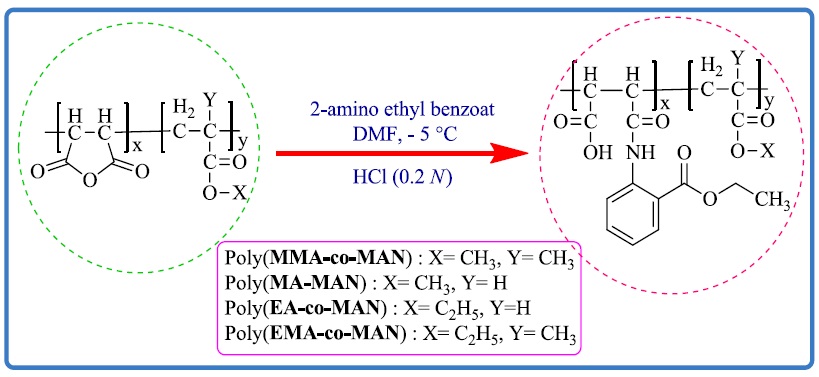
Synthesis and Chemical Modification of Maleic Anhydride Copolymers with 2-Amino Ethyl Benzoate Groups

Synthesis and Chemical Modification of Maleic Anhydride Copolymers with 2-Amino Ethyl Benzoate Groups

Volume 1, Issue 1, Summer 2018, Pages 56-65

https://doi.org/10.29088/sami/AJCA.2018.6.5665

Mohammad Hosein Nasirtabrizi, Seid Jafar Mousavi

Abstract Maleic anhydride (MAN) copolymers with methyl methacrylate, ethyl methacrylate, methyl acrylate, ethyl acrylate, and butyl acrylate monomers at 1:3 mole ratios were synthesized by free radical polymerization in the presence of azobis(isobutyronitrile) as initiator and dry ethyl acetate as solvent. Copolymer compositions were obtained using related proton nuclear magnetic resonance (1HNMR) spectra, and the polydispersity of the copolymers was determined by gel permeation chromatography. Then, a solution of 2-amino ethyl benzoate salt as a nucleophilic reagent reacted through the ring opening of anhydride groups in copolymers resulting to modified copolymers Iab to Vab. All the prepared polymers were characterized by Fourier transform infrared and1H NMR spectroscopic techniques. The glass transition temperature (Tg) of all copolymers before and after modification was determined by dynamic mechanical thermal analysis (DMTA). It was shown that chemical modification of MAN copolymers with 2-amino ethyl benzoate substituents as side chains decreased the free volume of the polymers, and therefore, the rigidity and Tg are increased.

The Theoretical Prediction of Thermophysical properties, HOMO, LUMO, QSAR and Biological Indics of Cannabinoids (CBD) and Tetrahhdrocannabinol (THC) by Computational Chemistry

The Theoretical Prediction of Thermophysical properties, HOMO, LUMO, QSAR and Biological Indics of Cannabinoids (CBD) and Tetrahhdrocannabinol (THC) by Computational Chemistry

Volume 2, Issue 3, Summer 2019, Pages 190-202

https://doi.org/10.33945/SAMI/AJCA.2019.2.190202

Ajoy Kumer, Nuruzzaman Sarker, Sunanda Paul, Afroza Zannat

Abstract Some thermophysical parameters of CBD and THC such as free energy, entropy, dipole moment, binding energy, nuclear energy, electronics energy, heat of formation, and chemical reactivity like HOMO (Occupied Molecular Orbital Highest) and LUMO (Lowest Unoccupied Molecular Orbital, HUMO-LUMO gap, ionization potential and electron affinity were calculated via semi-empirical and molecular mechanic method. For the characterization, the IR vibration spectroscopy, NMR in case of coupling and shielding constant were calculated. The Quantitative Structure Activity Relation (QSAR) properties of molecules like charge density, surface area grid, volume, LogP, polarizability, refractivity, molecular mass were determined using the HyperChem 8.0.10 program. Using the thermophysical and QSAR data, the IC50 and pHIC50 (–logIC50) was developed which is referred as biological activity parameter.

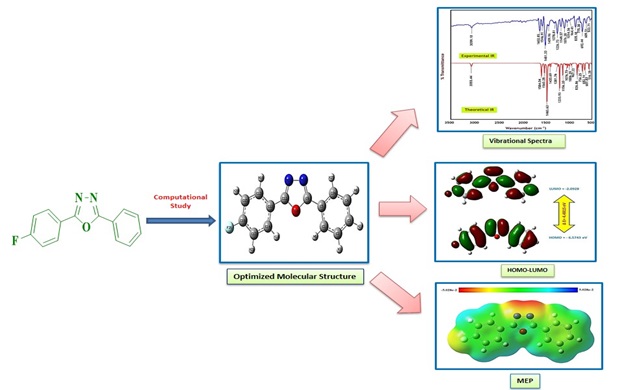
Molecular Structure, FT-IR Spectra, MEP and HOMO-LUMO Investigation of 2-(4-Fluorophenyl)-5-phenyl-1, 3,4-oxadiazole Using DFT Theory Calculations

Molecular Structure, FT-IR Spectra, MEP and HOMO-LUMO Investigation of 2-(4-Fluorophenyl)-5-phenyl-1, 3,4-oxadiazole Using DFT Theory Calculations

Volume 4, Issue 3, May and June 2021, Pages 220-230

https://doi.org/10.22034/ajca.2021.283003.1254

Sunil Laxman Dhonnar, Nutan Vitthal Sadgir, Vishnu Ashok Adole, Bapu Sonu Jagdale

Abstract In the present work, synthesis and DFT study of 2-(4-fluorophenyl)-5-phenyl-1,3,4-oxadiazole is reported. The 6-311++G (d,p) basis set was used to optimize the molecular structure of the title compound using the DFT/B3LYP method.The structural parameters, bond length, and bond angle were studied. The fundamental vibrational wavenumbers and intensities were computed, and the observed and calculated wavenumbers were found to be in excellent agreement.  In order to decide the reactivity and possible site for electrophilic and nucleophilic, Frontier molecular orbital (HOMO-LUMO) energies, global reactivity descriptors, molecular electrostatic potential as well as Mulliken charges were calculated using the same theory. The obtained results indicates that the compound possess good kinetic stability. The molecular electrostatic potential surface analysis shows that the nitrogen atom oxadiazole ring is the binding site for electrophilic attack.

Importance of Microwave Heating In Organic Synthesis

Importance of Microwave Heating In Organic Synthesis

Volume 2, Issue 2, Spring 2019, Pages 94-104

https://doi.org/10.29088/SAMI/AJCA.2019.2.94104

Sumitra Nain, Ruchi Singh, S Ravichandran

Abstract Microwave is a convenient source of heating for organic synthesis. The heating is instantaneous and very specific. Nowadays Microwave assisted organic synthesis may consider all the previously heated reaction by this technique. The benefits of this organic synthesis by microwave increasingly making this technique more established worldwide. The various organic molecules may be quickly, efficiently, cleanly as well as economically synthesized by this technique. This article is mainly focusing on the importance of organic synthesis by microwave heating.

The prediction and theoretical study for chemical reactivity, thermophysical and biological activity of morpholinium nitrate and nitrite ionic liquid crystals: A DFT study

The prediction and theoretical study for chemical reactivity, thermophysical and biological activity of morpholinium nitrate and nitrite ionic liquid crystals: A DFT study

Volume 2, Issue 4, Summer 2019, Pages 316-326

https://doi.org/10.33945/SAMI/AJCA.2019.4.5

Mohammad Jahidul Islam, Ajoy Kumer, Nuruzzaman Sarker, Sunanda Paul, Afroza Zannat

Abstract As the morpholine and morphine have been used all over the world as pain killer drugs even used in cancer treatment, so the morpholine is more demanding chemical molecule. In our work, the morpholine has included the addition of inorganic anions like nitrate and nitrite for forming morpholinium based Ionic Liquid. Their chemical properties, biochemical properties, and physio-chemical properties are evaluated using computational chemistry through the Density Functional Theory (DFT). The biological properties have been shown that biological activity in the designed ionic liquid for uses in new drug discovery. From QSAR study, the value of the LogP is 0.713 and 1.7 which indicates hydrophobic nature and PIC50 is -2.14 and -3.96 respectively. The nitrate and nitrite comparison have been highlighted through this work. From QSAR and PIC50, it is seen that due to the nitrate addition with morpholine is more biological activity than nitrite. On the other hand, the toxicity of nitrate is less than nitrite.

Keywords Cloud